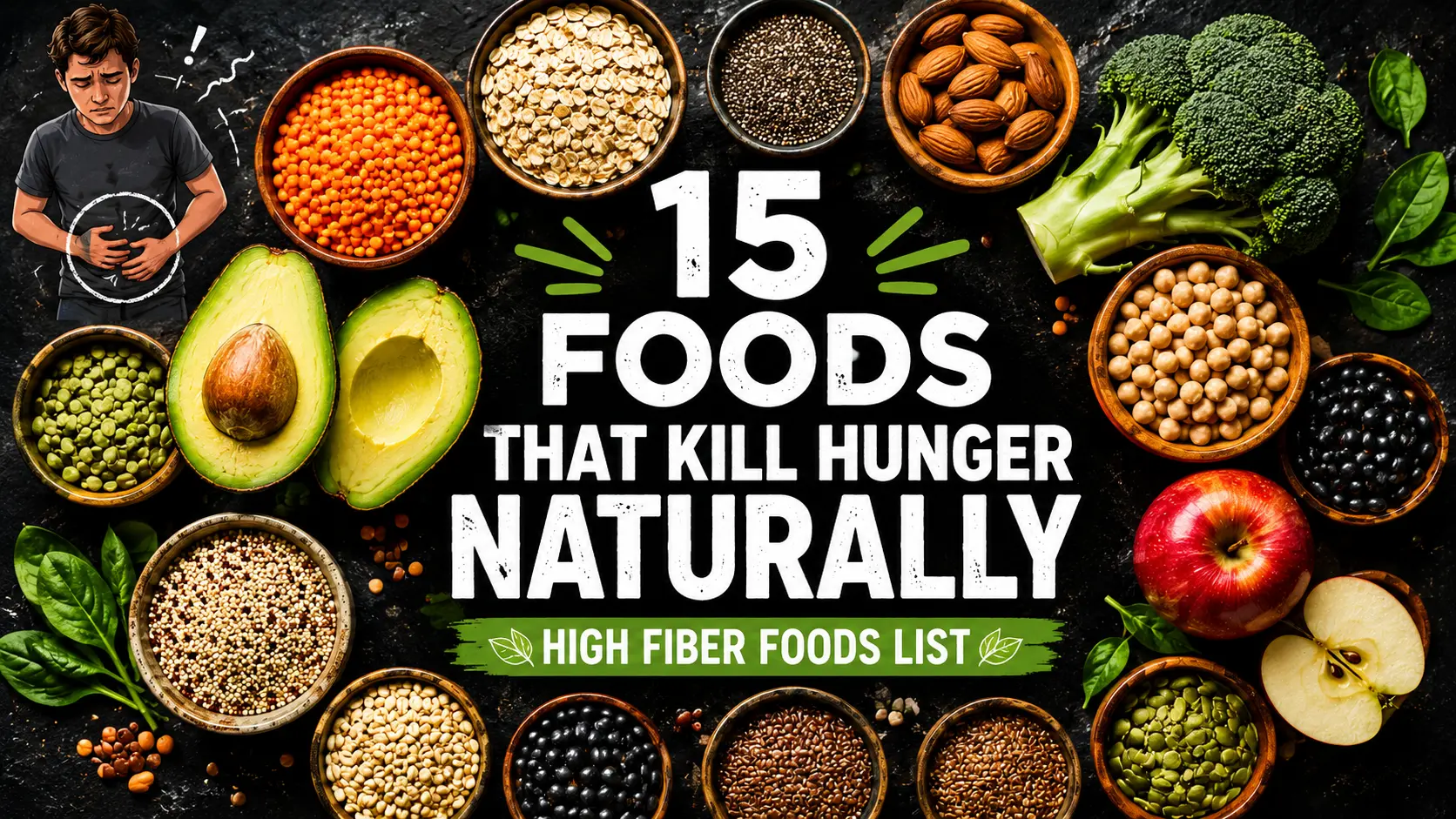
You eat a full meal. An hour later, your stomach is growling again. Sound familiar? You are not alone and the problem might not be how much you eat. It might be what you eat.
Most people focus on calories or protein when trying to control hunger. But fiber is the silent weapon almost everyone ignores. It slows digestion, keeps blood sugar stable, and sends fullness signals to your brain that last for hours , not minutes.
Here are 15 high fiber foods that kill hunger naturally and why each one works.
What Is Dietary Fiber and Why Does It Kill Hunger ?
Dietary fiber is a type of carbohydrate your body cannot fully digest. Unlike sugar or starch, fiber passes through your digestive system slowly and that slow movement is exactly what makes you feel full.
There are two types:
- Soluble fiber — dissolves in water, forms a thick gel in your stomach, slows digestion, and keeps you full longer.
- Insoluble fiber — adds bulk to your meals, moves food through your gut, and prevents overeating by making your stomach feel physically fuller.
Most people consume far less fiber than they need. The recommended daily intake is 25g for women and 38g for men , but the average person gets less than 15g per day. That gap is one of the biggest reasons people feel hungry all the time.
If you have ever wondered why you feel hungry even when trying to lose weight, low fiber intake is very often the real reason. You can read our article Why Do I Feel Hungry When Trying to Lose Weight ?
15 High Fiber Foods That Kill Hunger Naturally
1. Lentils — 15.6g of Fiber Per Cup
Lentils are one of the most fiber-dense foods on the planet. One cooked cup delivers over 15g of fiber more than half your daily target in a single serving. They are also rich in plant-based protein, which works together with fiber to keep hunger locked down for hours. Add them to soups, stews, or salads and you will notice the difference immediately.
2. Black Beans — 15g of Fiber Per Cup
Black beans are packed with both soluble and insoluble fiber, making them a double threat against hunger. The soluble fiber forms a thick gel in your stomach that slows the entire digestive process, while the insoluble fiber adds physical bulk. The result? You feel full faster and stay full longer. They are cheap, widely available, and work in almost any meal.
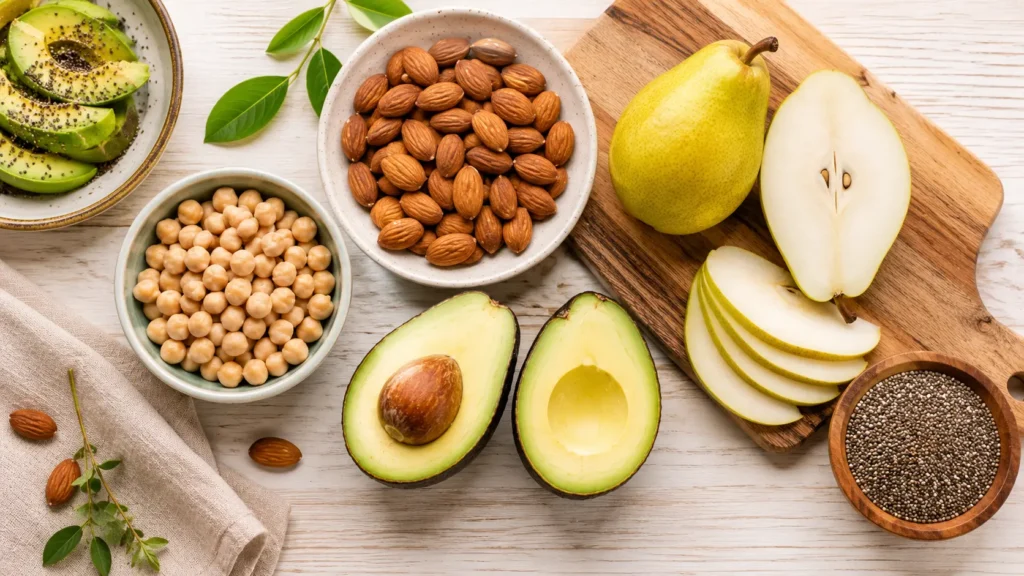
3. Avocado — 10g of Fiber Per Avocado
Most people think of avocado as a healthy fat food and it is. But it is also a serious fiber source. One whole avocado contains around 10g of fiber along with healthy monounsaturated fats that trigger your body’s fullness hormones. This combination makes avocado one of the most effective hunger-killing foods available. Half an avocado at lunch can completely change how hungry you feel by mid-afternoon.
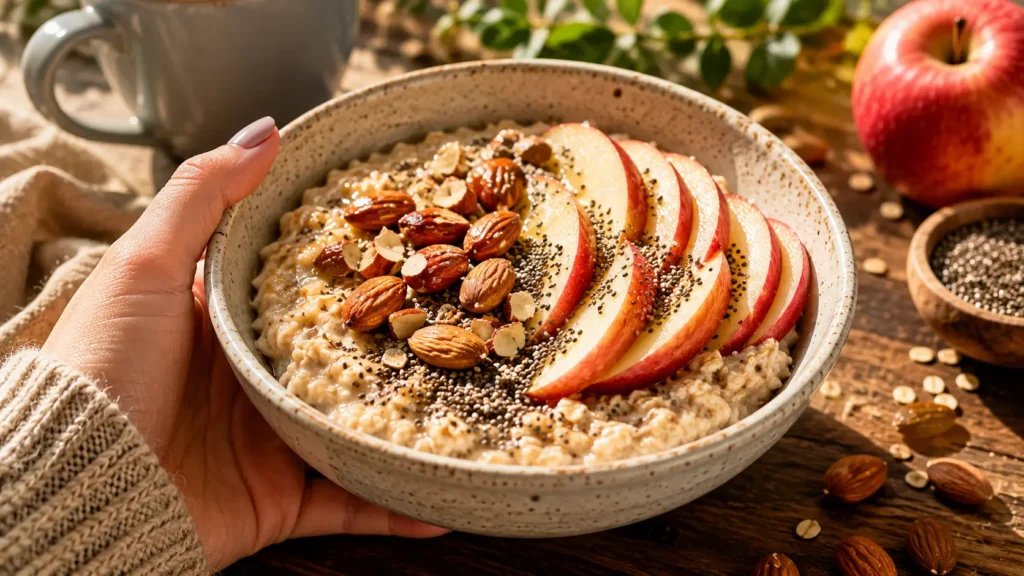
4. Oats — 4g of Fiber Per Cup (Raw)
Oats contain a powerful soluble fiber called beta-glucan. When you eat oats, beta-glucan forms a thick, sticky gel in your stomach that dramatically slows digestion. Studies consistently show that oat-based breakfasts keep people fuller for significantly longer than cereal or toast. They also help stabilize blood sugar , which means no mid-morning energy crash and no sudden hunger spike.
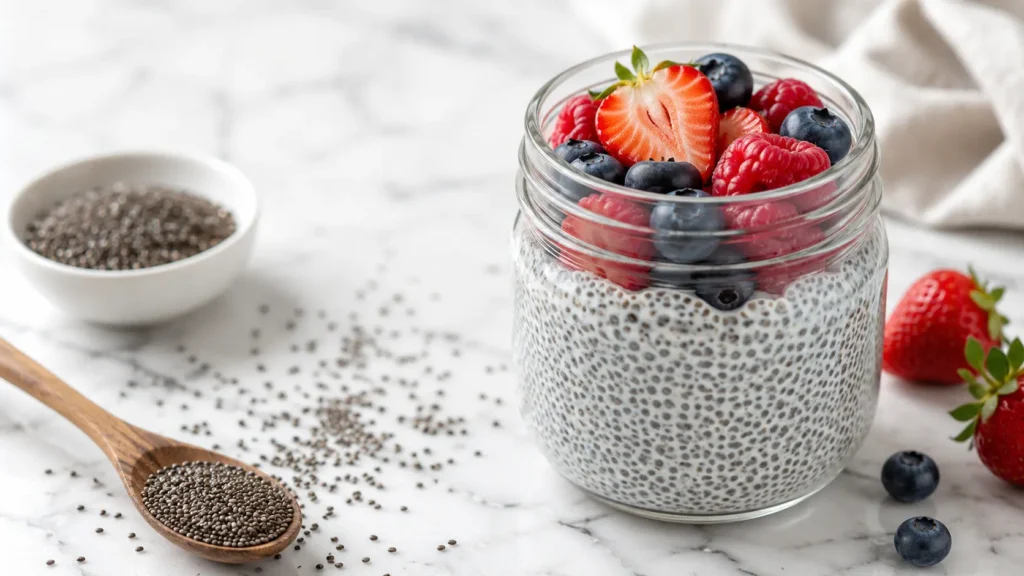
5. Chia Seeds — 10g of Fiber Per Ounce
Chia seeds are tiny but extraordinary. Just one ounce delivers 10g of fiber , almost entirely soluble. When chia seeds absorb liquid, they expand up to 10 times their original size and form a thick gel. This gel physically expands in your stomach and sends powerful fullness signals to your brain. Add them to water, yogurt, or smoothies and they will do the work quietly and effectively.
6. Broccoli — 5g of Fiber Per Cup
Broccoli is low in calories but extremely high in volume and fiber. You can eat a large amount of broccoli without consuming many calories and the fiber content ensures your stomach feels genuinely full. It also contains a compound called sulforaphane which supports gut health, making digestion more efficient overall. If you are trying to control portions, broccoli is one of the smartest foods you can add to your plate.
7. Apples — 4.4g of Fiber Per Medium Apple
An apple a day does more than keep the doctor away , it keeps hunger away too. Apples are rich in pectin, a soluble fiber that gels in your stomach and slows digestion significantly. The high water content also adds physical fullness without extra calories. The key is to eat apples whole not as juice. Juicing removes the fiber entirely, which is exactly what makes whole apples so effective at controlling appetite.
8. Quinoa — 5g of Fiber Per Cup (Cooked)
Quinoa is one of the few plant foods that is a complete protein , meaning it contains all essential amino acids. Combined with its fiber content, quinoa is uniquely powerful at controlling hunger because it works from two angles simultaneously: protein reduces appetite hormones while fiber slows digestion. People who switch from white rice to quinoa almost universally report feeling fuller for longer after meals.
9. Pears — 5.5g of Fiber Per Medium Pear
Pears are slightly higher in fiber than apples and just as effective at controlling hunger. Like apples, they are loaded with pectin , the soluble fiber that gels in your stomach. But pears also contain prebiotic fiber, a type of fiber that feeds the good bacteria in your gut. A healthier gut microbiome means better digestion, less bloating, and more consistent hunger signals and making pears one of the most underrated fruits for appetite control.
10. Almonds — 3.5g of Fiber Per Ounce
Almonds combine fiber, protein, and healthy fat in a single small package. This triple combination makes them one of the most efficient hunger-killing snacks available. Research shows that not all the calories in almonds are actually absorbed by the body and their cell structure means some pass through undigested. A small handful between meals can prevent the kind of extreme hunger that leads to overeating at dinner.
11. Sweet Potato — 4g of Fiber Per Medium Potato
Sweet potatoes are one of the most satisfying carbohydrate sources you can eat. Their fiber content slows how quickly glucose enters your bloodstream, which means steady energy and no blood sugar crash. That crash , the sharp drop in blood sugar after eating refined carbs is one of the primary drivers of sudden, intense hunger. By replacing white potatoes or white rice with sweet potatoes, you can dramatically extend the time between meals.
12. Chickpeas — 12.5g of Fiber Per Cup
Chickpeas , also called garbanzo beans are a staple food in South Asia and the Middle East for good reason. They are extraordinarily filling. One cup provides over 12g of fiber and 15g of protein. Studies have shown that people who regularly eat chickpeas and other legumes consume fewer calories overall without feeling deprived. Whether you eat them in hummus, curries, or salads, chickpeas are one of the most effective foods for natural appetite control.
13. Flaxseeds — 2.8g of Fiber Per Tablespoon
Do not let the small size fool you. Flaxseeds are one of the most concentrated sources of soluble fiber available. When ground flaxseeds meet liquid in your stomach, they form a thick mucilage that coats your digestive tract and dramatically slows the movement of food. This keeps you full and also helps stabilize blood sugar. Add ground flaxseeds to yogurt, oatmeal, or smoothies they are tasteless and virtually invisible but incredibly powerful.
14. Brussels Sprouts — 4g of Fiber Per Cup
Brussels sprouts are polarizing , people either love them or avoid them. But nutritionally, they are exceptional. They are high in fiber, extremely low in calories, and loaded with vitamins C and K. The fiber in Brussels sprouts is mostly insoluble, which means it adds significant bulk to your meals and speeds up the feeling of physical fullness. Roast them with olive oil and they become genuinely delicious and one of the best additions to any hunger-control diet.
15. Barley — 6g of Fiber Per Cup (Cooked)
Barley is one of the oldest grains in human history and one of the most underused today. It contains the highest beta-glucan content of any grain, even more than oats. Beta-glucan is the soluble fiber responsible for the thick, gel-like texture that makes oatmeal so filling. Studies consistently show that barley reduces hunger hormones and extends fullness significantly longer than most other grains. Use it in soups, stews, or as a rice substitute.
How Much Fiber Do You Actually Need Per Day ?
According to dietary guidelines:
- Women need approximately 25g of fiber per day
- Men need approximately 38g of fiber per day
Most people get fewer than 15g per day. That gap is enormous and it explains why so many people feel constantly hungry despite eating regular meals.
One important warning: do not increase your fiber intake too quickly. Jumping from 10g to 35g overnight can cause bloating, gas, and discomfort. Increase gradually over 2 to 3 weeks and drink more water as you do , fiber needs water to work properly.
Simple Tips to Get More Fiber Without Overhauling Your Diet
You do not need to completely change how you eat. Small swaps make a significant difference:
- Switch white rice to brown rice or quinoa
- Add a handful of lentils or chickpeas to any meal
- Snack on almonds or an apple instead of biscuits or chips
- Add a tablespoon of ground flaxseeds to your morning oats
- Replace sugary breakfast cereal with oats
- Keep the skin on fruits and vegetables , that is where most of the fiber lives
Pairing high fiber foods with the right portion sizes creates an even more powerful effect. If you want to understand exactly how to combine both strategies, read our guide on portion control for weight loss . Read our article The Simple Portion Control for Weight Loss Guide
High Fiber vs High Protein: Which One Kills Hunger Better ?
This is a question many people ask and the honest answer is: both, together.
Protein works by reducing hunger hormones like ghrelin and increasing fullness hormones like peptide YY. It is powerful, fast-acting, and highly effective.
Fiber works differently , it physically slows digestion, stabilizes blood sugar, and extends the feeling of fullness over a much longer period.
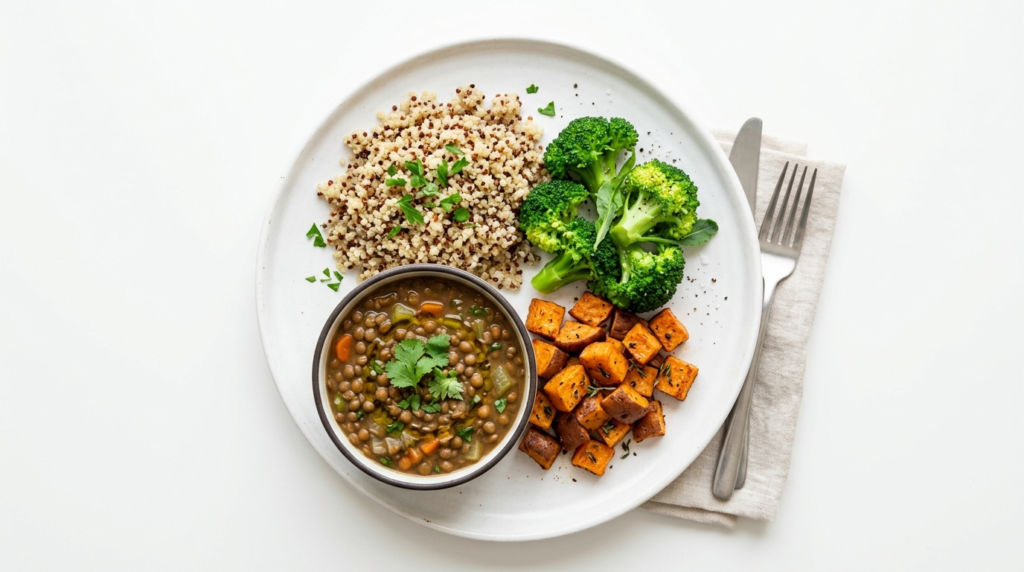
When you combine high fiber foods with high protein foods in the same meal, you get both the immediate and the long-lasting hunger-killing effect. Foods like lentils and chickpeas actually give you both in a single serving.
For the best high protein foods to pair with this list, see our full High Protein Foods List.
Internal link : High Protein Foods List: 20 Best Sources to Eat Every Day
Frequently Asked Questions
What is the highest fiber food you can eat?
Lentils and black beans are among the highest fiber foods available, both delivering over 15g per cooked cup. Chia seeds are also exceptionally high at 10g per ounce.
Can eating more fiber help me lose weight?
Yes. Fiber helps you feel full on fewer calories, which naturally reduces overall intake. It also slows digestion and stabilizes blood sugar, which prevents the sudden hunger spikes that lead to overeating. Multiple studies have shown that increasing fiber intake alone , without any other dietary change leads to meaningful weight reduction over time.
How quickly does fiber reduce hunger?
Soluble fiber like beta-glucan and pectin begins forming a gel in your stomach within 30 to 60 minutes of eating. You will typically notice a sustained reduction in hunger within the first few days of consistently increasing your fiber intake.
Is it possible to eat too much fiber?
Yes. Consuming very high amounts , especially suddenly can cause bloating, gas, cramping, and digestive discomfort. Always increase fiber intake gradually over several weeks and drink plenty of water throughout the day.
Final Thoughts
Hunger is not a willpower problem. It is often a fiber problem.
The 15 high fiber foods on this list are not trendy superfoods or expensive supplements. They are ordinary, accessible foods that work through simple, proven biology. Add more of them to your meals and your body will naturally feel fuller, crave less, and eat better without any complicated diet plan.
Start with one or two from this list. Pick the ones that fit easily into your current meals. Give it one week and pay attention to how differently your hunger feels.
The results might surprise you.
National Library of Medicine — Beta-Glucan and Satiety: A Review
https://www.ncbi.nlm.nih.gov/pmc/articles/PMC6566984/