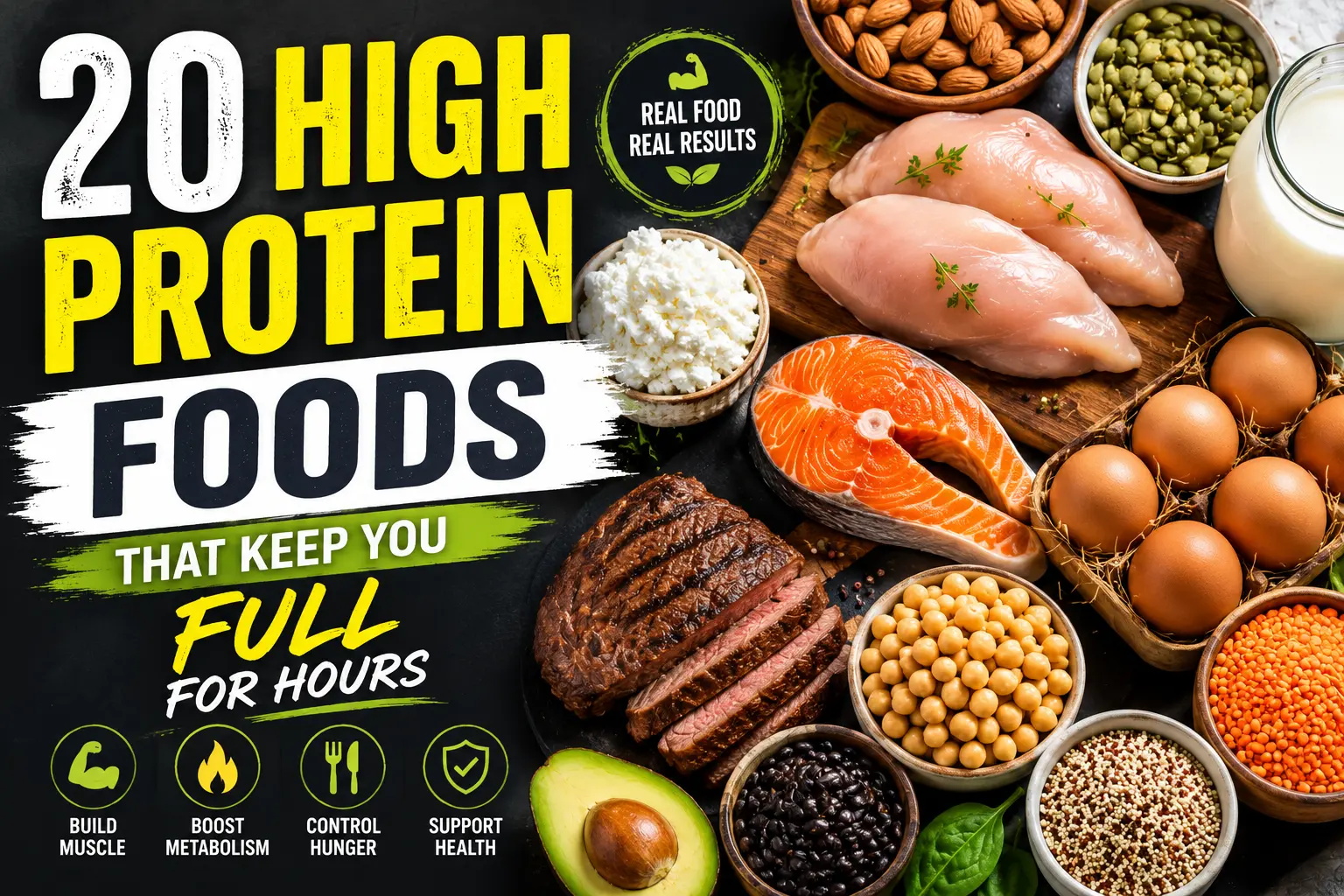
High protein foods are one of the most effective ways to stay full longer, reduce cravings, and support healthy fat loss.
You just ate a full meal. And twenty minutes later, your stomach is already sending signals again.
Sound familiar? Most people blame willpower. Or stress. Or just ‘the way they are.’
But in most cases, the real answer is simpler. You are not eating enough protein.
Protein is the only nutrient your body cannot fake. It is the most filling thing you can eat. It keeps hunger quiet for hours. It protects your muscle while you lose fat. And most people , all over the world are not eating nearly enough of it.
This article gives you the complete list of high protein foods you can find anywhere in the world, no expensive supplements required. Just real food that works.
Why Protein is the Most Powerful Nutrient for Weight Loss
Before the list, here is why protein matters more than anything else you eat.
When you eat protein, your body releases hormones that tell your brain: ‘We are done. Stop eating.’ At the same time, it suppresses ghrelin , the hormone that makes you feel hungry. The result is that you feel full faster, stay full longer, and eat less without even trying.
Research consistently shows that people who increase their daily protein intake naturally eat 300 to 400 fewer calories per day , without counting a single calorie or going on any diet.
Three things protein does that nothing else can:
- Kills hunger for hours — much more effectively than carbs or fat
- Preserves muscle while you lose fat — so the weight you lose is fat, not muscle
- Boosts metabolism — your body burns more calories digesting protein than any other food
If you are always hungry no matter what you eat, the first thing to check is your protein intake. We cover this in detail in our article on why you are always hungry.
How Much Protein Do You Actually Need Each Day?
Most nutrition guidelines recommend between 0.8 grams to 1.2 grams of protein per kilogram of body weight per day for active adults. If you are trying to lose weight or build muscle, aim for the higher end.
Simple examples:
- 60 kg person → aim for 60–80 g of protein per day
- 75 kg person → aim for 75–100 g of protein per day
- 90 kg person → aim for 90–120 g of protein per day
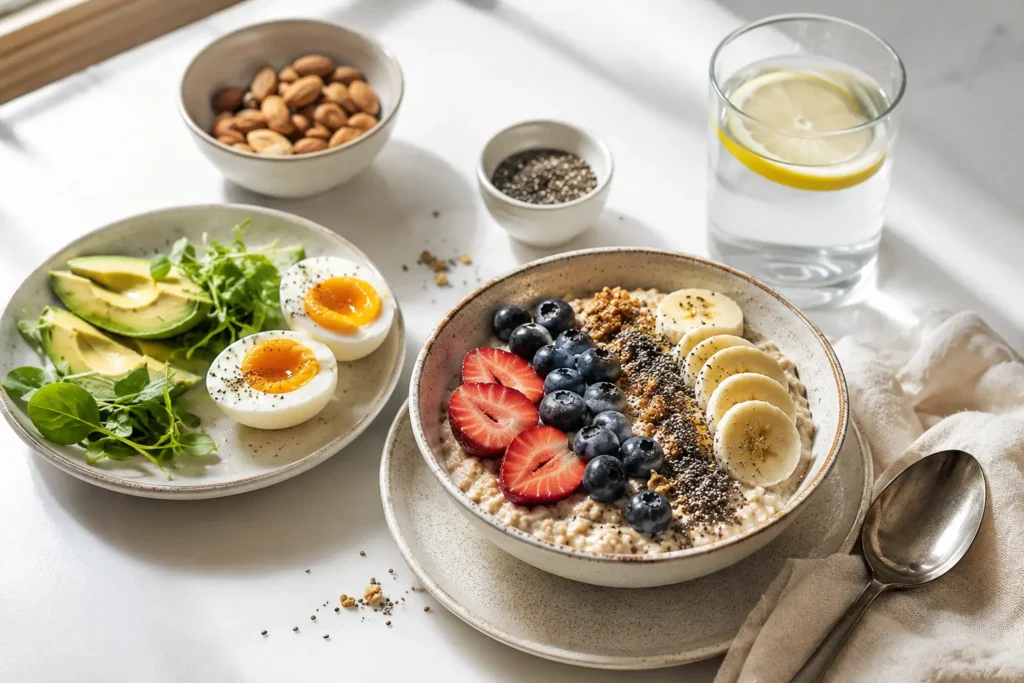
You do not need to track every gram forever. Just make sure every meal has a clear protein source. That habit alone will get most people to their daily target.
Want to pair this with better portion habits? Read: The Simple Portion Control Guide That Actually Works
The Complete High Protein Foods List : 20 Best Sources
These are ranked by protein content, availability, and how easy they are to add to everyday meals , whether you are in the US, UK, Pakistan, Europe, or anywhere else in the world.
Animal-Based Protein Sources
1. Eggs — 6g protein per egg
Eggs are one of the most complete protein sources on earth. They contain all nine essential amino acids. Boiled, scrambled, poached , the method does not matter. What matters is eating them.
Add two eggs to breakfast and you have already started the day with a 12g protein foundation.
2. Chicken Breast — 31g protein per 100g
The most well-known protein food in the world for good reason. Chicken breast is lean, versatile, and available in every country. Grill it, bake it, add it to a salad or a rice bowl. It works with every cuisine.
3. Canned Tuna — 25g protein per 100g
One of the cheapest, most convenient protein sources available globally. No cooking needed. Open the tin, add it to a salad, mix it with rice, or eat it straight. Canned tuna is a protein powerhouse that fits any budget.
4. Salmon — 25g protein per 100g
Salmon gives you protein and omega-3 fatty acids together, which reduces inflammation, supports brain health, and helps your body absorb nutrients more efficiently. Farmed or wild-caught — both are excellent choices.
5. Greek Yogurt — 17g protein per 100g
Regular yogurt and Greek yogurt look similar but are very different. Greek yogurt is strained to remove liquid, which concentrates the protein dramatically. Eat it plain with fruit, use it as a dip, or add it to smoothies.
Note: this is double the protein of regular yogurt. Always check the label.
6. Cottage Cheese — 11g protein per 100g
Cottage cheese is slow-digesting, which means it keeps you full for longer than most other dairy foods. It is particularly good as an evening snack because it digests slowly through the night, supporting muscle recovery while you sleep.
7. Turkey — 29g protein per 100g
Turkey is slightly leaner than chicken and equally high in protein. It is available worldwide and works in the same meals as chicken. A great option to rotate in for variety.
8. Beef (Lean Cuts) — 26g protein per 100g
Lean beef like sirloin or mince provides protein plus iron and zinc , two minerals many people are deficient in, especially those who feel constantly tired. Choose leaner cuts to keep calories reasonable.
Plant-Based Protein Sources
Whether you eat meat or not, these plant sources should be part of your daily diet. They combine protein with fiber , which means they fill you up even faster.

9. Lentils — 9g protein per 100g cooked
Lentils are one of the best foods for hunger control anywhere in the world. They are cheap, available everywhere, cook in 20 minutes, and combine protein with fiber. Red lentils, green lentils, brown lentils , all excellent. Dal in South Asia, soup in Europe, salad in North America , they fit every cuisine.
10. Chickpeas — 9g protein per 100g cooked
Chickpeas are a complete hunger-fighter: protein plus fiber together. Roast them for a crunchy snack, add them to curries, blend them into hummus, or throw them into a salad. Available canned or dried in every country.
11. Black Beans — 8g protein per 100g cooked
Particularly popular in South America and the US, but available globally canned. Add to rice, soups, or tacos. One cup of black beans provides around 15g of protein and comparable to a small serving of meat.
12. Edamame — 11g protein per 100g
Edamame are young soybeans and one of the rare plant foods that provides complete protein (all nine essential amino acids). Eat them as a snack, add to stir-fries, or mix into salads.
13. Tofu — 8g protein per 100g
Tofu absorbs the flavor of whatever you cook it with, making it one of the most versatile protein sources in the world. Stir-fry, grill, scramble it like eggs and it works. Also a complete protein source.
14. Quinoa — 4g protein per 100g cooked
Quinoa is one of the only grains that contains all nine essential amino acids. Use it anywhere you would use rice or oats. It is higher in protein and lower in glycemic impact, meaning it keeps blood sugar stable and hunger quieter.
Other High Protein Foods Worth Adding
15. Whey Protein Powder — 20–25g protein per scoop
Protein powder is not essential, but it is the most convenient way to hit your protein target on days when your meals are light. Mix it with water, milk, or a smoothie. It digests quickly, making it ideal right after exercise.
16. Almonds — 21g protein per 100g
Almonds are one of the best snack-time protein sources. A small handful (about 30g) gives you 6g of protein plus healthy fats that keep hunger controlled between meals. Available everywhere, portable, no preparation needed.
17. Pumpkin Seeds — 19g protein per 100g
Pumpkin seeds are surprisingly high in protein and also rich in magnesium, which supports sleep quality and muscle function. Add them to oats, yogurt, or salads. One of the most underrated foods on this list.
18. Hemp Seeds — 31g protein per 100g
Hemp seeds are one of the highest plant-based protein sources available. They can be sprinkled on virtually anything like yogurt, smoothies, rice, salads , without changing the taste. Also a complete protein.
19. Milk — 3.4g protein per 100ml
A glass of whole milk (250ml) provides around 8–9g of protein. Simple, affordable, available everywhere. Works well as a base for smoothies or protein shakes and gives you calcium alongside the protein.
20. Peanut Butter — 25g protein per 100g
Two tablespoons of natural peanut butter gives you around 8g of protein. Add it to oats, spread it on whole grain toast, or mix it into a smoothie. Affordable and available in every country. Choose natural versions with no added sugar.
How to Add More Protein to Every Meal — Without Overthinking It
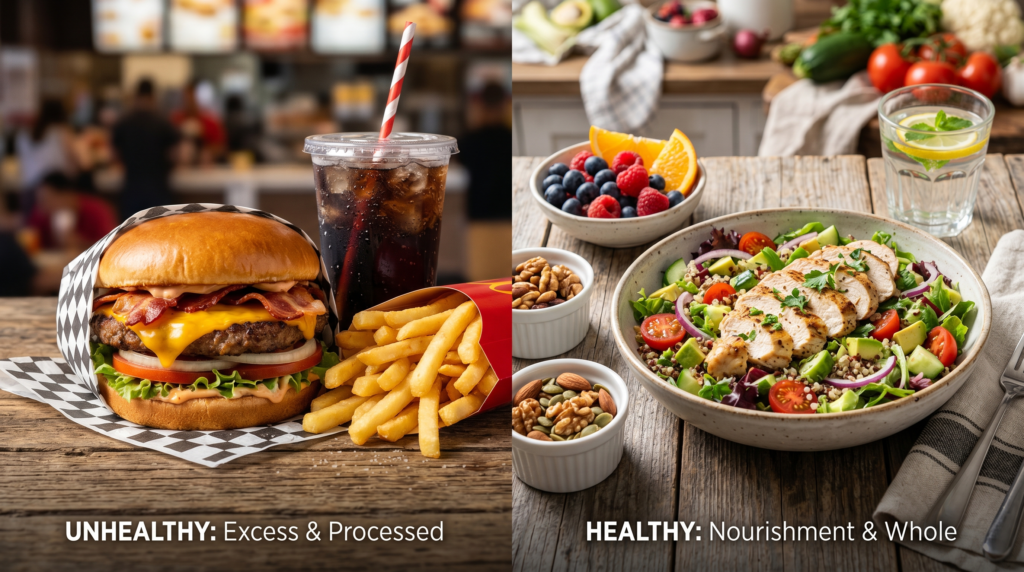
You do not need to overhaul your diet. Just apply one rule: every meal needs a protein anchor.
Breakfast options:
- 2 boiled eggs + a glass of milk
- Greek yogurt with a handful of almonds
- Oats with hemp seeds and peanut butter stirred in
Lunch options:
- Grilled chicken with salad and quinoa
- Lentil soup with a slice of whole grain bread
- Canned tuna mixed into rice with vegetables
Dinner options:
- Salmon fillet with roasted vegetables
- Dal (lentils) with brown rice — a protein and fiber powerhouse
- Chicken or turkey stir-fry with edamame
Snack options:
- A handful of pumpkin seeds or almonds
- Cottage cheese with fruit
- A protein shake if meals were light
For better results, combine high protein eating with the habits covered in our complete natural weight loss guide.
The Most Common Protein Mistakes People Make
Mistake 1: Only eating protein at dinner
Most people eat a low-protein breakfast and lunch, then pile all their protein into one evening meal. Your body cannot store and use large amounts of protein at once. Spread it across all three meals for maximum benefit.
Mistake 2: Thinking they eat enough protein already
A typical breakfast of toast and coffee has almost zero protein. A lunch of rice and vegetables might have 5 to 8g. That means most people reach dinner having consumed less than 15g of protein and they wonder why they are hungry all day.
Mistake 3: Relying only on supplements
Protein shakes are a convenient top-up, not a replacement. Real food protein comes packaged with vitamins, minerals, and fiber. Build your diet around the foods on this list first. Use supplements to fill gaps, not as the foundation.
Protein works best when your gut is healthy enough to absorb it. Read: 7 Powerful Nutrition Tips to Improve Gut Health

Start With One Change Today
You do not need to eat all 20 foods on this list. You do not need to count grams obsessively or buy expensive supplements.
You just need to make sure every meal has one clear protein source on the plate.
That single habit , repeated daily and will reduce your hunger, protect your muscle, boost your metabolism, and make every other weight loss habit you try work better.
Pick one food from this list you are not currently eating regularly. Add it to your next meal. Start there.
Small changes, repeated consistently, create the results that extreme diets never do.
Key Takeaways
- Protein is the most filling nutrient — it reduces hunger hormones and keeps you full for hours
- Most adults need 0.8–1.2g of protein per kg of body weight daily
- Top animal sources: eggs, chicken, tuna, salmon, Greek yogurt, cottage cheese
- Top plant sources: lentils, chickpeas, quinoa, edamame, hemp seeds, peanut butter
- Every meal needs a protein anchor — breakfast, lunch, and dinner
- Spreading protein across meals works better than loading it all into one
Reference: Harvard T.H. Chan School of Public Health — The Nutrition Source: Protein https://www.hsph.harvard.edu/nutritionsource/what-should-you-eat/protein/