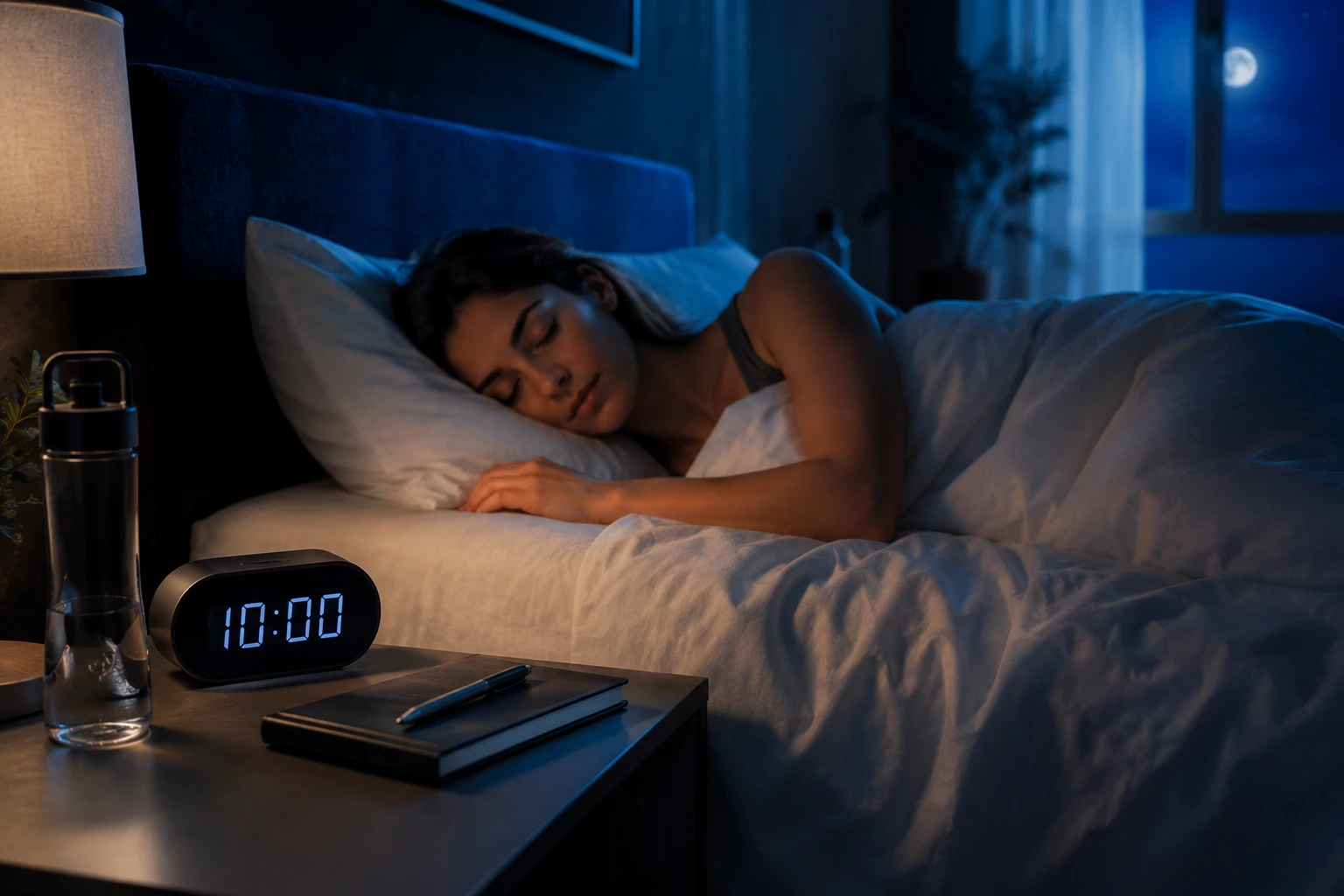
How Many Hours of Sleep Do You Need to Lose Weight requires might be the reason your diet still isn’t working.
You’re eating healthier. Exercising more. Trying to control portions. But no matter what you do, the scale barely moves. Most people blame calories, carbs, or lack of motivation.
But science shows something surprising: your body struggles to burn fat properly when you don’t get enough sleep.
In fact, research has found that people who sleep too little feel hungrier, crave more junk food, store more fat, and lose significantly less weight — even when eating the same number of calories.
That means your late-night scrolling, irregular sleep schedule, or “just one more episode” habit could be quietly sabotaging your weight loss progress every single day.
So how many hours of sleep do you actually need to lose weight effectively?
The answer may change the way you think about fat loss forever.
Sleep.
Most people think weight loss is just about calories in vs. calories out. But research from the University of Chicago and other leading institutions reveals something that changes everything: Most people think weight loss is just about calories in vs. calories out. But research from the University of Chicago and other leading institutions reveals something that changes everything: sleep is just as important as diet and exercise for losing weight.
In fact, when people restrict their sleep while maintaining the same diet and exercise routine, they lose 55% less body fat. They feel hungrier. They crave junk food. Their metabolism slows down.
Here’s the good news: you can fix this. And it starts with understanding how many hours of sleep you actually need.
Why Sleep Matters More Than You Think for Weight Loss
When you’re sleep-deprived, your body isn’t just tired—it’s working against your weight loss goals.
Here’s what happens:
Your hunger hormones go haywire. Sleep controls two critical hormones: leptin (which tells you when to stop eating) and ghrelin (which tells you when to eat). When you don’t sleep enough, leptin drops and ghrelin spikes. Translation: You feel hungrier, even though your body doesn’t actually need more food.

Your cortisol (stress hormone) skyrockets. Lack of sleep triggers a cortisol spike. This stress hormone signals your body to conserve energy—which means it hangs onto fat instead of burning it. This is why sleep-deprived people gain weight even when they’re not eating more.
Your insulin sensitivity crashes. Within just 4 days of poor sleep, your body’s ability to process insulin drops by more than 30%. This means your body struggles to convert food into energy, and instead stores it as fat.
Your willpower disappears. A tired brain makes bad decisions. When you haven’t slept enough, your prefrontal cortex—the part of your brain responsible for self-control—shuts down. Suddenly, that late-night snack seems irresistible.
This isn’t weakness. It’s neuroscience.
How Many Hours Sleep Weight Loss Actually Requires
So how many hours of sleep do you need to lose weight?
The answer: 7-9 hours per night for most adults.
But here’s what’s important: this isn’t just a recommendation. This is what your body needs to function properly for weight loss.
Research shows that people sleeping more than 7 hours per night had significantly higher weight loss success compared to those sleeping 7 hours or less. When people aimed for 8.5 hours of sleep per night in studies, they naturally reduced their calorie intake by an average of 270 calories per day—without even trying.
That’s 1,890 calories per week. Nearly 8,000 calories per month. That’s more than 2 pounds of fat loss per month just from sleeping more.
And you didn’t have to diet harder or exercise more. You just slept.
What Happens When You Sleep Less Than 7 Hours?
This is where it gets scary.
An analysis of 20 studies involving 300,000 people found that adults who slept fewer than 7 hours per night for most adults.This is the ideal range experts recommend when discussing how many hours sleep weight loss success depends on.
An analysis of 20 studies involving 300,000 people found that adults who slept fewer than 7 hours per night had a 41% increased risk of obesity.
Let’s break down what happens when you consistently sleep less than 7 hours:
Days 1-3: You feel tired, but you think you can push through. Your appetite increases slightly.
Days 4-7: Your insulin sensitivity drops by over 30%. Your body starts storing more fat. You crave high-carb, high-fat foods. You notice you’re hungrier even after eating.
Week 2+: In studies, people sleeping 5.5 hours lost 55% less body fat than those sleeping 8.5 hours—despite eating the same calories and exercising the same amount. They also lost more muscle mass, which is the opposite of what you want.
Your late-night snacking increases. You choose snacks with twice as much fat as someone well-rested. Your portions get bigger. Your energy crashes, so you move less and burn fewer calories throughout the day.
This is why so many people plateau on their weight loss journey. They’re not eating too much. They’re not exercising wrong. They’re simply not sleeping enough.
The Practical Sleep Guide for Weight Loss
Now that you understand how many hours sleep weight loss requires, here’s what to actually do:
Aim for 7-9 hours in bed (not just asleep). This gives you a buffer. You might fall asleep in 10-20 minutes, so aim for 7-9 hours in bed to ensure 7+ hours of actual sleep.

Start by going to bed 30 minutes earlier. You don’t need to overhaul your entire sleep routine. Just move your bedtime 30 minutes earlier. This small change can improve sleep quality and help you lose weight.
Stop eating 2-3 hours before bed. Late-night eating disrupts sleep quality and increases weight gain. Your body can’t digest properly while you’re trying to sleep, which causes poor sleep and slower metabolism the next day.
Turn off screens 1-2 hours before bed. The blue light from your phone, laptop, and TV suppresses melatonin production. Darkness signals your brain that it’s time to sleep. This single change can dramatically improve sleep quality.
Keep your bedroom cool, dark, and quiet. Your body sleeps best in temperatures around 65-68°F (18-20°C). Invest in blackout curtains if needed. Even small amounts of light can disrupt sleep quality.
How Sleep Connects to Your Other Weight Loss Habits
Here’s something important: sleep works with your diet and exercise, not instead of them.
Better sleep makes you more likely to stick to your portion control goals (check out our guide on Better sleep makes you more likely to stick to your portion control goals (check out our guide on 3 Simple Ways to Control Portions Without Dieting for more). It gives you the energy to work out consistently. It stabilizes your blood sugar so you don’t crave junk food.
On the flip side, lack of sleep undermines everything else you’re doing. You could be following the perfect diet and exercise routine, but if you’re sleeping 6 hours per night, you’re fighting against your own biology.
That’s why the complete weight loss guide emphasizes sleep alongside diet and exercise. They’re equally important.
Ready to Lose Weight? Start Here
Understanding how many hours sleep weight loss needs is just one piece of the puzzle. If you’re serious about losing weight naturally, you need a complete strategy that covers nutrition, exercise, and sleep together.

Start with our complete guide on how to lose weight naturally to understand the full picture. Then dive deeper into specific topics like portion control and why you might still be hungry while dieting.
The more you understand how your body works, the easier weight loss becomes.
Key Takeaways
• Most adults need 7-9 hours of sleep per night for optimal weight loss
• Sleeping less than 7 hours increases obesity risk by 41%
• Poor sleep causes hunger hormone imbalances, cortisol spikes, and insulin resistance
• Extending sleep by 1-2 hours can naturally reduce calorie intake by 270+ calories per day
• Quality sleep is just as important as diet and exercise for weight loss
• Start by moving your bedtime 30 minutes earlier tonight Your Turn: What time are you going to bed tonight? Set a reminder on your phone to turn off screens and head to bed 30 minutes earlier than usual. Small changes compound into big results
According to the World Health Organization, obesity and weight gain are strongly influenced by lifestyle factors such as diet, physical activity, and sleep habits. World Health Organization
https://www.who.int/news-room/fact-sheets/detail/obesity-and-overweight