
You followed your diet perfectly. You exercised. You slept well. And then you stepped on the scale and gained 2kg overnight.
Water retention and weight loss are two things that confuse almost every person who starts a diet. You eat well all week. You exercise. You sleep properly. Then you step on the scale and it shows you gained 2kg overnight.
That weight is not fat. It is water. And once you understand the connection between water retention and weight loss, you will never quit a diet because of a bad scale reading again.
What Is Water Retention?
Water retention happens when your body holds extra fluid in your tissues instead of flushing it out normally.
Your body weight is not just fat and muscle. It also includes water, food in digestion, and waste. This means your weight can go up or down by 1 to 3 kilograms in a single day , with absolutely zero change in actual fat.
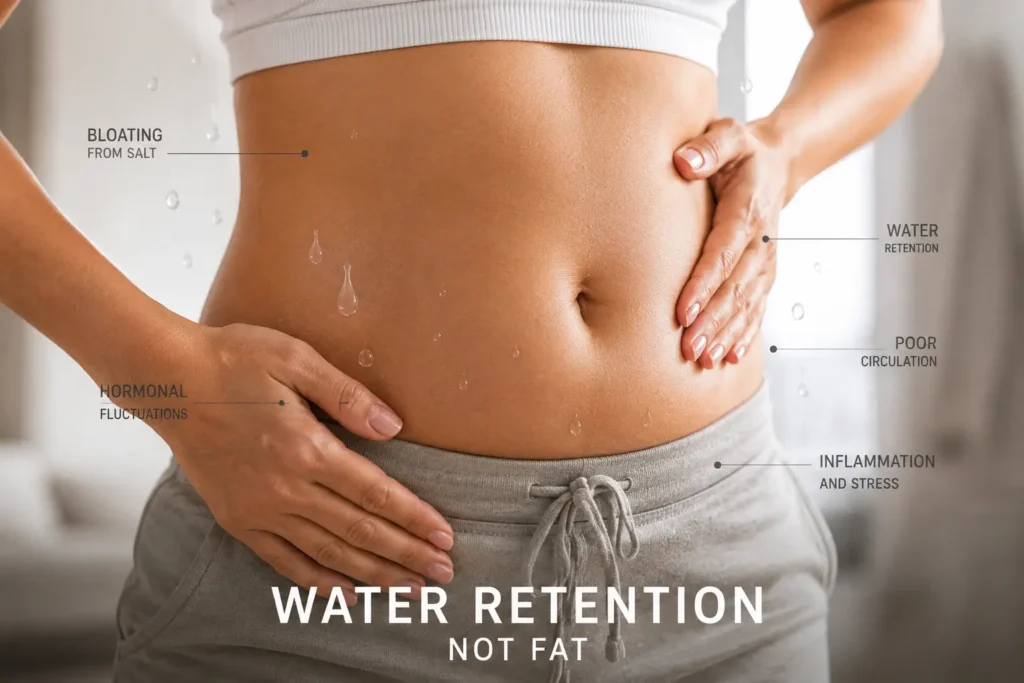
Water weight fluctuations often hide real fat loss progress on the scale.You can be losing fat every day , but water retention hides that progress completely.
Why Does Water Retention Happen During Weight Loss?
When you start losing weight your body goes through major hormonal changes. These changes directly cause water retention in most people.
The main reasons:
- Cortisol increases from the stress of dieting — cortisol tells your kidneys to hold water
- Insulin changes from eating differently — affects how much fluid your body retains
- New exercise causes muscle inflammation — your body sends water to repair muscles
- Cutting carbohydrates releases water — eating carbs again causes sudden water retention
This is why temporary water weight changes confuse so many people during dieting. The scale moves in the opposite direction of your actual fat loss progress.
Simple Tip
Never judge your weight loss progress by a single day on the scale. Always look at your weekly average , not daily numbers.
7 Main Causes of Water Retention
1. Too Much Salt
Sodium is the number one cause of water retention. Your body holds water to dilute excess salt in your bloodstream. One salty meal can cause 1 to 2kg of water weight overnight.
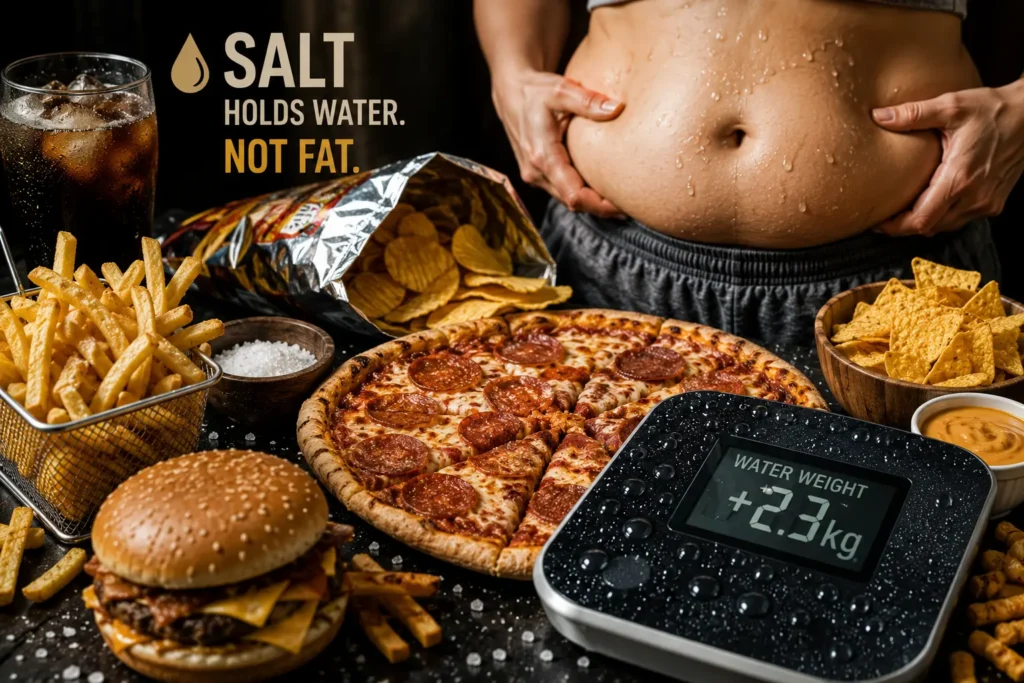
According to health experts, sodium changes can temporarily increase fluid retention dramatically within 24 hours.
2. Carbohydrate Intake
Every gram of carbohydrate stored in your muscles holds approximately 3 grams of water. Eat a high-carb meal after restricting carbs and your weight jumps dramatically the next morning. This is one of the biggest reasons body weight fluctuates so dramatically after cheat meals or high-carb days.
3. Hormonal Changes
Women experience significant water retention and weight loss fluctuations during their menstrual cycle. Estrogen and progesterone directly affect fluid retention , causing 1 to 3kg fluctuations throughout the month that have nothing to do with fat.
4. Stress and High Cortisol
Chronic stress raises cortisol which signals your kidneys to retain sodium and water. This is why chronic stress can make people feel bloated, puffy, and heavier even while dieting consistently.

Read our guide on how to reduce stress naturally to keep cortisol low.
5. Not Drinking Enough Water
This sounds backwards — but dehydration actually causes water retention. When your body is dehydrated it goes into survival mode and holds onto every drop of water it has. Drink more water to lose water weight faster.
6. Poor Sleep
Sleep deprivation raises cortisol and aldosterone — both of which cause water retention. This is another powerful connection between quality sleep and water retention and weight loss results.
7. Starting a New Exercise Routine
New workouts cause tiny muscle tears. Your body sends water to those muscles to repair them and causing temporary water retention that lasts 3 to 5 days. This is completely normal and means your muscles are getting stronger.
How Water Retention Hides Your Real Progress
Here is a simple example of how water retention and weight loss interact on the scale:
Week 1 of your diet:
- Actual fat lost: 500g
- Water retained from new exercise: 1.5kg
- Scale shows: +1kg
The scale went UP — but you actually lost fat!
This is exactly why so many people quit in the first two weeks. They are losing real fat but water retention makes the scale show weight gain. They think the diet is not working and stop.
Understanding water retention and weight loss is what separates people who succeed from people who quit too early.
Simple Tip
Take body measurements and progress photos every two weeks. These show real fat loss even when the scale does not move.
How to Reduce Water Retention Naturally
1. Drink more water daily
Drink 8 to 10 glasses per day. More water tells your body it is safe to release stored water. Dehydration causes retention and hydration releases it.
2. Cut down on salt
Reduce processed foods, fast food, and salty snacks. Cook at home with less salt. Within 24 to 48 hours water retention drops noticeably.
3. Eat more potassium-rich foods
Potassium balances sodium in your body. Bananas, sweet potatoes, spinach, and avocado are excellent sources. More potassium means less water retention naturally.
4. Move your body every day
Walking and light exercise improve circulation and help flush excess water from your tissues. Even a 20-minute walk helps significantly. Read our morning habits for weight loss guide for simple daily movement ideas.
5. Manage your stress
Lower cortisol means less water retention. Simple breathing exercises, daily walks, and quality sleep all reduce cortisol and help your body release stored water.
How to Measure Real Fat Loss Progress
Since water retention and weight loss make the scale unreliable and use these better methods:
Weekly average weight Weigh yourself every morning and calculate the weekly average. This smooths out daily water fluctuations and shows real fat loss trend.
Body measurements Measure your waist, hips, and chest every two weeks. These show real fat loss even when the scale does not move.

How your clothes fit Clothes getting looser means fat loss is happening , regardless of what the scale says.
Progress photos Take photos every two weeks in the same lighting. Visual changes show real body composition progress clearly.
Energy levels Feeling stronger and more energetic means your body is changing positively even if the scale fluctuates daily.
Simple Tip
Weigh yourself once per week only , same day, same time, same conditions. Daily weighing causes unnecessary stress and confusion with water retention.
Your Simple Action Plan
To minimize water retention and weight loss confusion from today :
- Drink 8 to 10 glasses of water daily
- Reduce salt and processed food
- Eat potassium-rich foods every day
- Weigh yourself weekly — not daily
- Exercise consistently even when scale goes up
- Manage stress and sleep well every night
- Never judge progress by one day’s scale reading
- Use measurements and photos alongside the scale
Water retention and weight loss will always interact with each other. Your body will always fluctuate. The scale will sometimes lie to you.
The people who succeed at losing weight are not the ones who have perfect scale readings every day. They are the ones who understand that water retention and weight loss fluctuations are completely normal and keep going anyway.
Fat loss is happening even when the scale goes up. Trust the process. Measure properly. Stay consistent.
For the complete system that makes everything work together read our full guide on how to lose weight naturally.
Reference: Harvard Health Publishing — The truth about fats :
https://www.health.harvard.edu/staying-healthy/the-truth-about-fats-bad-and-good