You are exhausted. You lie down. You close your eyes.
And then your brain decides it is the perfect time to think about everything.
Work. Relationships. That embarrassing thing you said years ago. Tomorrow’s to do list. Everything and nothing at the same time. Sleep hygiene is the foundation of quality rest and overall health…
Sound familiar?
If it does, you are not alone. Millions of people around the world , in the United States, the United Kingdom, Japan, Germany, Pakistan, South Korea, France, and everywhere in between struggle to get a good night of sleep.
And here is the thing most people do not know: poor sleep does not just make you tired the next day. It affects your mood, your focus, your immune system, your weight, and your mental health in ways that slowly add up without you ever connecting the dots.
The good news? Most sleep problems are not medical problems. They are habit problems. And habits can always be changed.
That is what sleep hygiene is all about.
What Is Sleep Hygiene?
Sleep hygiene simply means the daily habits and routines that either help or hurt the quality of your sleep.
Think of it like brushing your teeth. You do it every day not because your teeth hurt right now, but because you know it protects your health over time. Good sleep hygiene works the same way — small, consistent daily habits that protect the quality of your rest every single night.
No expensive gadgets. No special supplements. No complicated routines.
Just simple, practical habits that anyone anywhere in the world can start doing today.
“It affects your mood, your focus, your immune system, your weight, and your mental health“
mental health” → https://fithubpros.com/reduce-stress-naturally/
1. Wake Up and Sleep at the Same Time Every Day
This is the most important sleep hygiene habit on this list. If you only do one thing from this article, make it this one.
Your body has an internal clock. Scientists call it the circadian rhythm. When you sleep and wake at the same time every day, this clock works smoothly. You fall asleep faster, sleep more deeply, and wake up feeling genuinely rested.
But when you stay up late some nights and sleep in on weekends, you confuse this clock completely. This is what researchers call social jetlag — and it is one of the biggest hidden reasons why so many people around the world feel constantly tired.
Start here: Pick a sleep time and a wake time that works for your life. Stick to them every day — including weekends. Even if you slept badly, get up at the same time. Your body will adjust within one to two weeks.
2. Put Your Phone Down 30 Minutes Before Bed
This is the one most people resist. But it is also one of the biggest changes you can make for your sleep.
The light from your phone screen tells your brain to stay awake. It blocks melatonin — the natural hormone your body produces to prepare you for sleep. Even 20 to 30 minutes of scrolling before bed can push your sleep back by more than an hour.
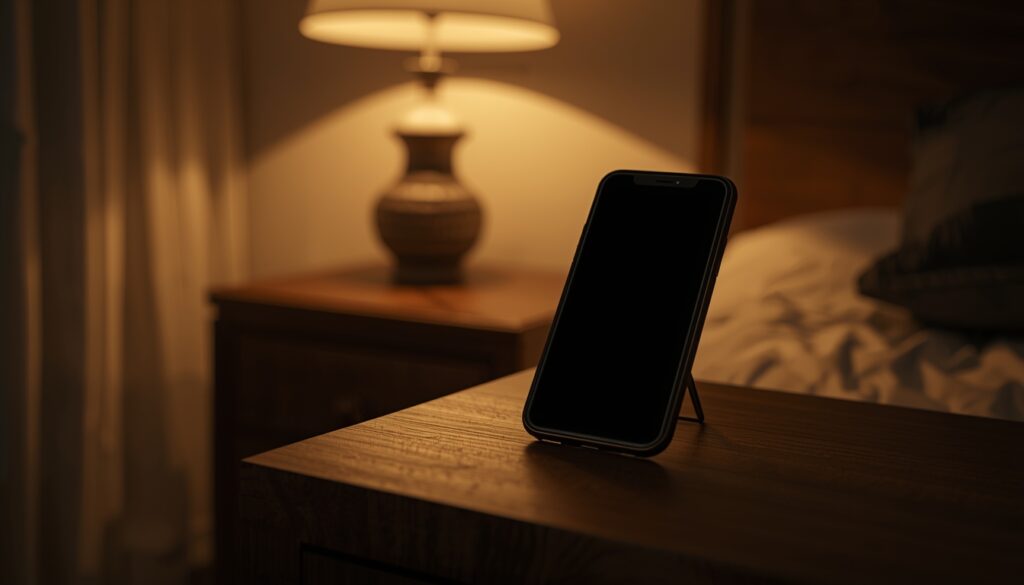
Start here: Set a simple rule. Phone goes down 30 minutes before bed. Put it in another room if you need to. Replace it with something calm — reading a real book, stretching lightly, or just sitting quietly.
3. Keep Your Bedroom Cool, Dark, and Quiet
Where you sleep matters just as much as when you sleep.
Most sleep researchers recommend a room temperature between 60°F and 67°F (16°C to 19°C) for the deepest sleep. Darkness also matters more than most people think — even a small amount of light can disrupt your sleep without you ever fully waking up.
- Use blackout curtains or a simple sleep mask
- Open a window or use a fan to keep the room cool
- Use earplugs if noise is a problem where you live
“Do some light stretching”
“light stretching” → https://fithubpros.com/home-workouts-for-beginners/
4. Stop Drinking Caffeine After 2 PM
Caffeine stays in your body for a long time — its effects last around 5 to 6 hours. So if you have a coffee at 4 PM, half of that caffeine is still active in your body at 10 PM, telling your brain to stay awake.
This applies to coffee, energy drinks, black tea, green tea, cola drinks, and many other beverages that people enjoy around the world every day.
Start here: Set a personal caffeine cutoff at 1 PM or 2 PM. After that, switch to herbal teas like chamomile, lemon balm, or peppermint — available in almost every country and naturally calming before bed.
5. Create a Simple Wind-Down Routine
Your brain needs time to shift from busy to calm. A wind-down routine is simply a set of calm, easy activities you do in the 30 to 60 minutes before bed every night.

Simple wind-down ideas that work everywhere in the world:
- Read a few pages of a physical book
- Write in a notebook — jot down 3 things that happened today and anything on your mind for tomorrow
- Do some light stretching
- Take a warm shower or bath — the drop in body temperature afterwards naturally triggers sleepiness
- Listen to calm, quiet music
6. Get Natural Sunlight in the Morning
When natural light hits your eyes in the morning, it sends a signal to your body that the day has started. This sets your internal clock. About 14 to 16 hours later, your body starts producing melatonin and preparing you for sleep.
This is why people who spend their entire day indoors — whether working in an office in Paris or studying in Seoul — often struggle with sleep more than people who spend time outside.
Start here: Within 30 to 60 minutes of waking up, step outside or sit near a bright window for 10 to 15 minutes. No sunglasses. Just let natural light reach your eyes.
7. Get Out of Bed If You Cannot Sleep
When you cannot sleep, the natural instinct is to stay in bed and try harder. But this actually makes the problem worse over time. Your brain starts to connect your bed with anxiety and wakefulness instead of rest.
Start here: If you have been lying awake for more than 20 minutes, get up. Go to another room. Do something quiet and calm in low light. Do not use your phone. Go back to bed only when you feel genuinely sleepy.
8. Be Careful What You Eat and Drink at Night
What you put into your body in the evening has a direct effect on how well you sleep.
- Finish your last main meal at least 2 to 3 hours before bed
- If hungry close to bedtime, choose something light — a banana, a handful of nuts, or warm milk
- Cut back on alcohol, especially within 3 hours of sleep
- Stay hydrated through the day so you are not drinking large amounts right before bed
a banana, a handful of nuts, or warm milk”
“warm milk” → https://fithubpros.com/improve-gut-health/
How Long Before You See Results?
Most people notice a real improvement in their sleep within 1 to 2 weeks of applying these habits consistently. You do not need to change everything at once. Pick the one habit from this list that feels most relevant to you right now. Practice it every day for one week. Then add another one.
According to the National Sleep Foundation, adults need 7–9 hours of sleep each night to maintain optimal physical and mental health.
https://www.sleepfoundation.org/how-sleep-works/how-much-sleep-do-we-really-need